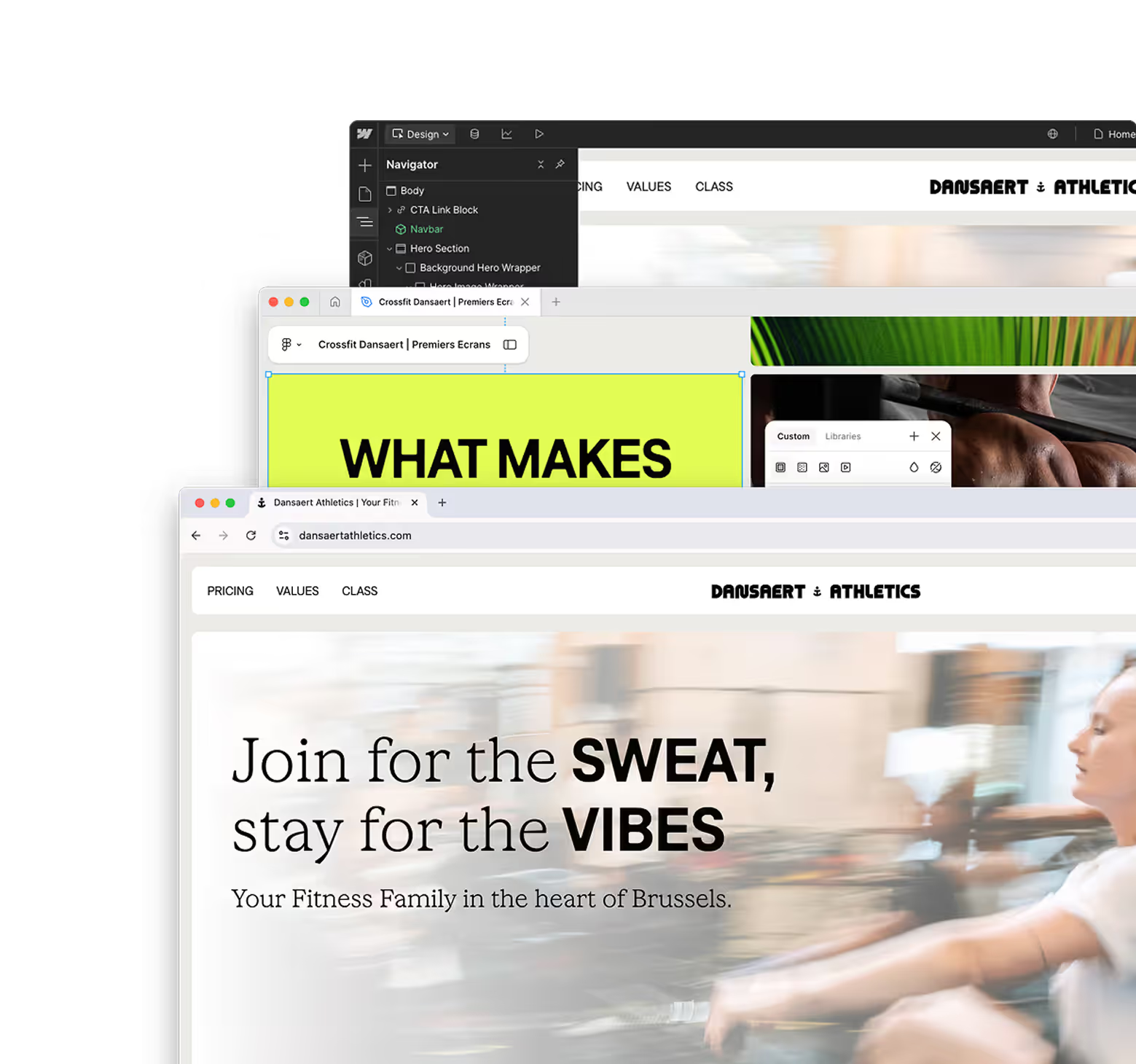
The Webflow agency for leadgen-oriented B2B companies
We design tailor-made websites that engage your audience, convert your visitors and support your growth.


A Webflow agency that understands your marketing challenges
Webflow turnkey website
Each page is designed to capture the attention and convert your visitors. We design tailor-made Webflow experiences that simplify the daily life of your marketing team.

Webflow development on demand
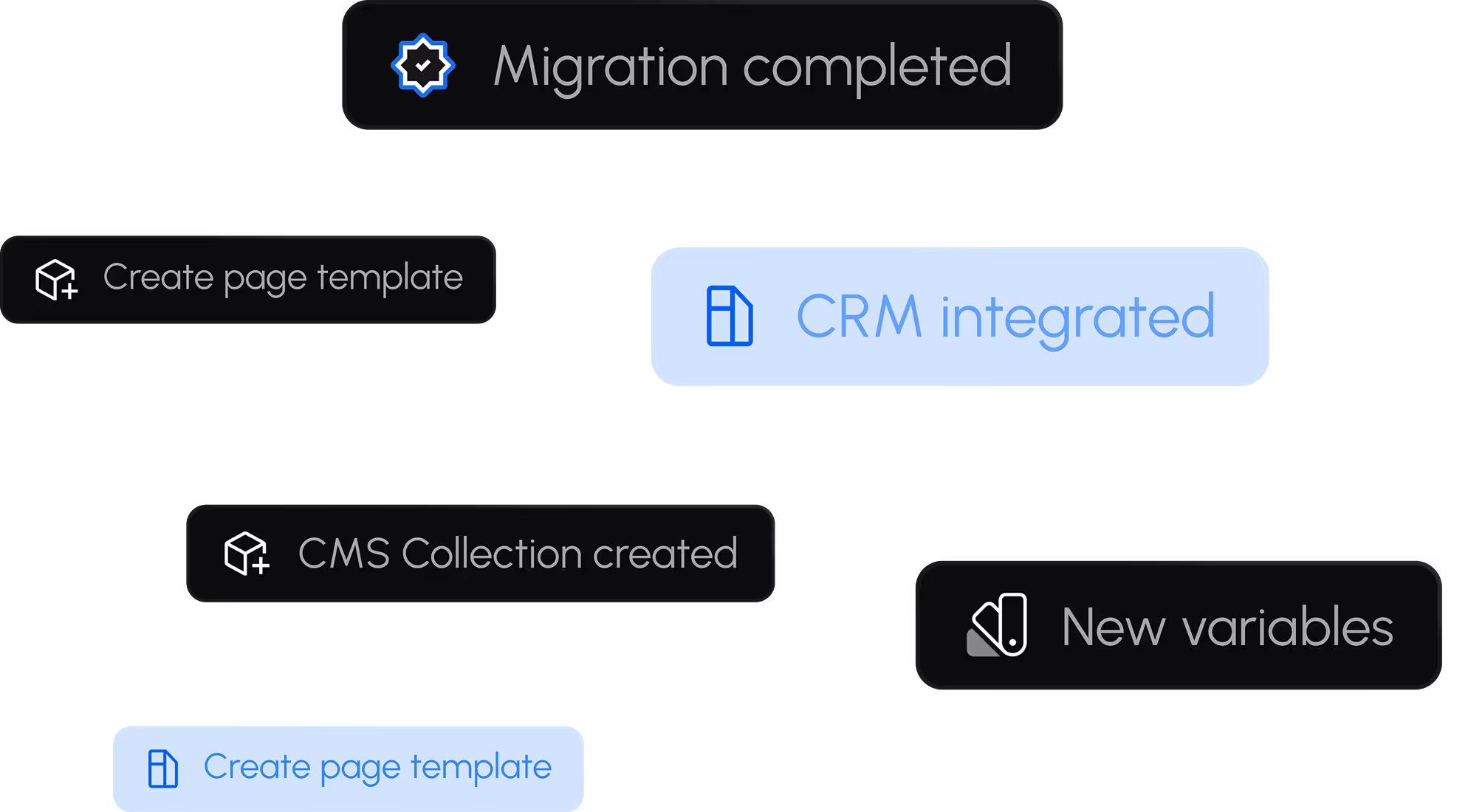
Need to integrate your Figma designs or migrate your site to Webflow? Our Webflow developers support you in your specific missions. We ensure pixel-perfect development without slowing down your operations. A simple, fast and dependency-free service.
Is your brand ready for a new website?
Redesigning your website often reveals that your brand needs a refresh too. If that’s the case, we support you early on, helping evolve your brand before launching your Webflow site.
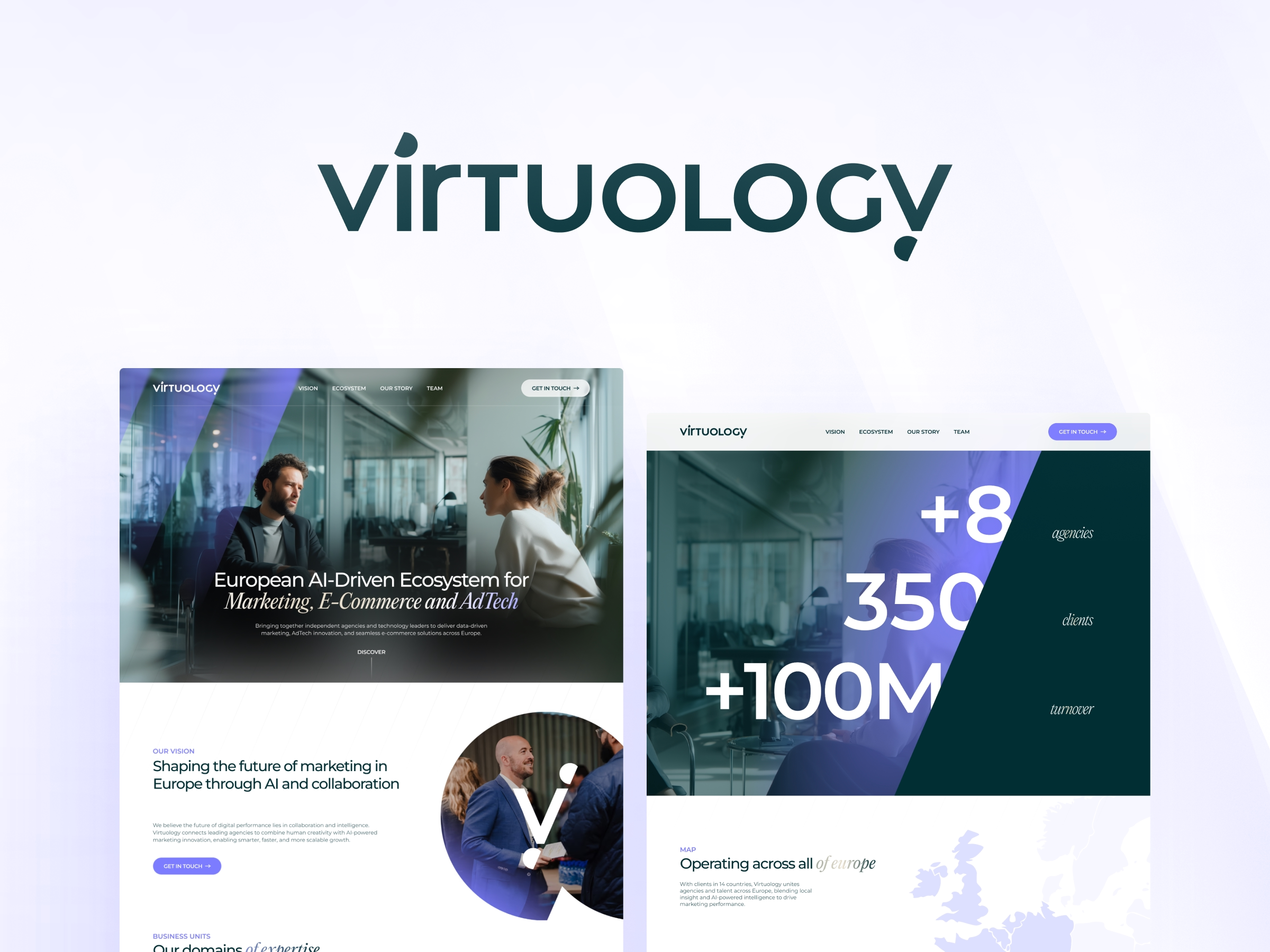
Our recent customer cases
Tailored Webflow sites built to express your brand and connect with your audience.
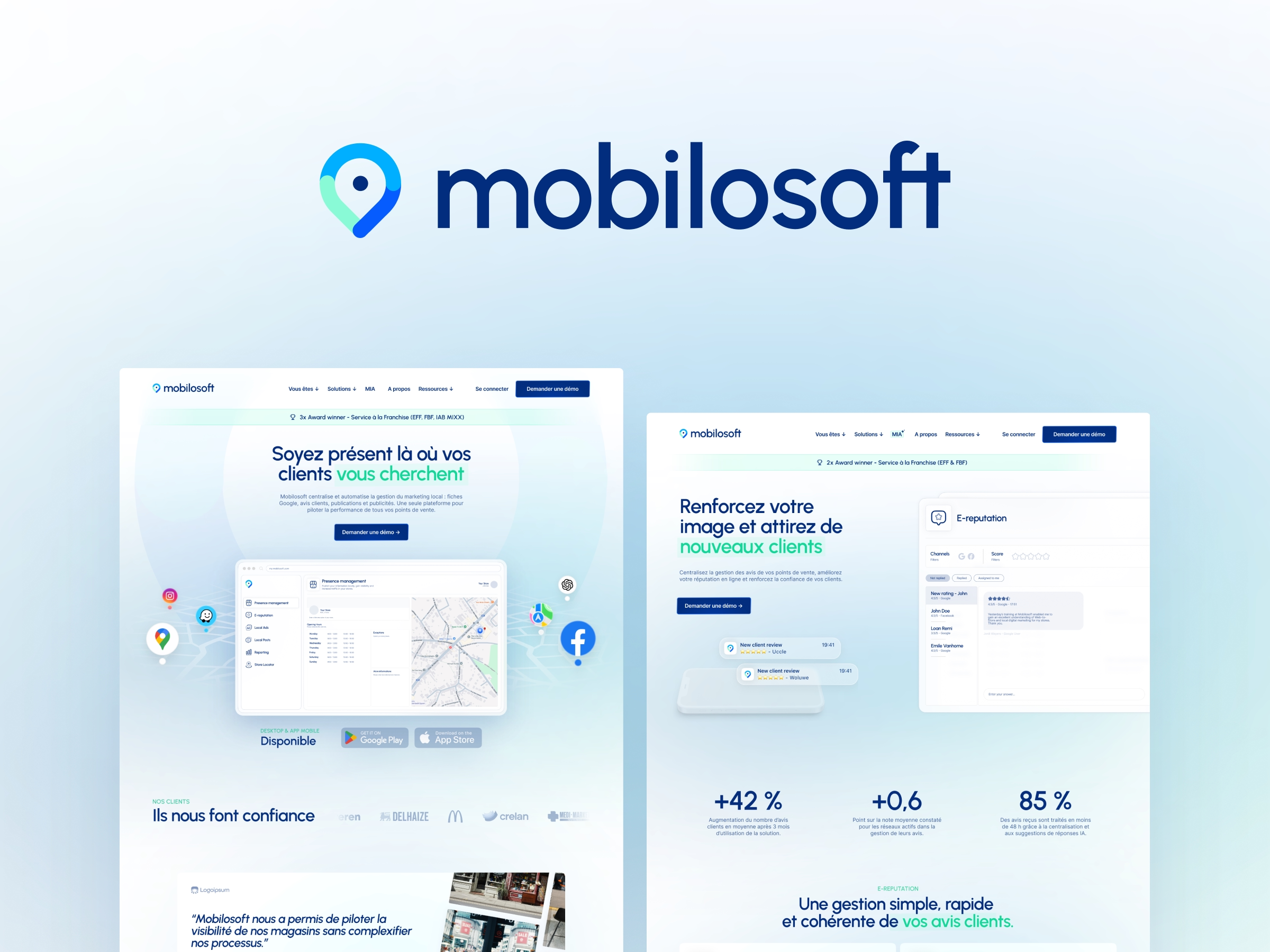
They trusted us with their Webflow site
B2B companies that trusted us to structure, design and develop their Webflow site with a strategic, performance-oriented and autonomous approach. They share their experience with We-R on video.

Why working with a Webflow agency
At We-R, we chose Webflow to give our customers a strategic advantage.
We are creating a comprehensive Design System for your marketing teams to edit and publish without technical dependency.
Your Webflow site grows with you: integrations WWX or Webflow Cloud to transform your site into a real web application.
We train your marketing teams to manage your Webflow site through the Design System. Launch your offers, test your ideas and adapt your site in a few hours. Decisions are becoming fast and data-driven.
Combine the speed of no-code with the power of custom development.
Hosting, security and automatic backups managed without maintenance on your part.
Connect Webflow to all your IT and marketing tools, without friction.
Why work with our agency?
We-R is a Webflow agency oriented towards strategy and conversions, which designs sites designed as evolving marketing systems, not as fixed windows.
Any questions about Webflow ?
Full transparency to guide smart, informed decisions.
Webflow and WordPress do not answer the same problem.
WordPress is historically very flexible, but this flexibility is based on a stack of plugins, themes, and technical layers. Result: the more the site evolves, the more complex it becomes to maintain, secure and evolve without technical dependence.
Webflow, on the other hand, is a platform designed from the start for marketing teams.
It allows you to create powerful, personalized and efficient sites without compromising on quality, but without requiring a marketer to become a developer.
Concretely, Webflow allows:
- one much faster time-to-market,
- one better brand consistency thanks to the integrated design system,
- less technical debt over time,
- and real autonomy for teams on what matters: content, pages, iterations.
The real advantage of Webflow is not “technical”.
It's freeing up marketing teams to focus on the value, not the tool.
Yes provided that the site was well designed from the start, Hence the importance of choosing the right Webflow agency that accompanies you.
Webflow is a very powerful tool, but its real strength comes when it is structured as a system:
clear design system, reusable components, page templates, well-thought-out CMS.
In this context, a marketing team can:
- create new pages,
- publish content,
- adjust messages,
- test for variations,
- make the site evolve,
without touching the code and without risking breaking the structure.
This is where support is key:
a good Webflow agency does not deliver “just a site”, but a tool usable by non-techniques, without risk of breakage.
At We-R, the objective is clear: the agency builds the system, the marketing team makes it live.
Yes, Webflow is very solid for SEO, and particularly well positioned for current developments related to AI.
On the classic SEO level, Webflow allows:
- excellent performance (Core Web Vitals),
- total control of tags, URLs, redirections, structured data,
- a clean CMS to produce content on a large scale.
But above all, Webflow is actively evolving towards uses AEO/SEO for AIs :
- automatic generation of structured data,
- native integration of your llms.txt file.
As with any CMS, SEO does not depend on the tool alone, but Webflow offers a much healthier ground to build a sustainable SEO and AEO strategy.
A well-done migration does not destroy SEO. A poorly prepared migration, yes.
When migrating a site to Webflow, the challenge is not the platform, but the method:
- audit of pages that perform,
- analysis of existing keywords,
- maintaining or improving URLs,
- clean redirections,
- optimization of structure and contents.
In some cases, we observe:
- a slight temporary decrease (1 to 2 months),
- followed by a better performance than before, because the foundations are cleaner.
SEO is not “lost” during a migration.
He is transfers, protects and improves, provided that strategic work is done beforehand.
This is precisely where the support of your Webflow agency makes the difference.
Yes. And it is even one of its real strengths.
Webflow is often perceived as a “no-code” tool, so sometimes (wrongly) as limited.
In reality, the platform is designed to support growth.
Concretely, Webflow is scalable because:
- the structure is based on components and a complete design system (accelerated time-to-market),
- the CMS allows you to manage a lot of content without complexity (possible to do programmatic SEO),
- Webflow Cloud allows you to connect your apps to your website
- and Enterprise offers allow you to go a long way (security, governance, performance, collaboration at scale).
Scalability does not only come from technique, but from Time-to-Market : go faster, test faster, adjust more quickly. That's exactly what you can do if your Webflow agency builds this design system and helps you take control of it.
Yes, but no more than on any other CMS. A poorly designed Webflow site can harm SEO if it is slow, poorly structured, poorly tagged, if the images are heavy and not optimized, if there is unused code left across the pages,...
But that's not a problem Webflow, it is either a design problem (site delivered unfinished by the Webflow agency), or a maintenance problem (because you have not been trained to use your site properly).
A good Webflow site is based on a clear structure, a good internal network, pages in silos, useful pages that process a specific request (no SEO cannibalism), and all optimized assets: compressed images, renamed images, renamed images, ALT tags in place, removal of unused custom code, etc.
Yes, absolutely. Attention that a migration is not a redesign of the site: a WordPress to Webflow migration means to reproduce the site identically on Webflow. It is interesting for example if you have redone your site recently, that it has been well built, that a fundamental strategy has been carried out. You keep the same site, but you take advantage of all the advantages of Webflow to grow faster.
A WordPress -> Webflow migration is done in two key steps:
- dynamic content (blog, CMS, repeatable pages)
→ exportable in CSV, then cleanly reintegrated into Webflow CMS, - static pages
→ to redevelop block by block in Webflow.
Migrating is not copying and pasting a site, it is rebuilding the same site on a better technical basis.
If the site is recent, consistent and strategically aligned, a migration can be done without redesign.
It's not risky if it's done right. The risks mainly concern SEO: loss of pages, poorly redirected URLs (404 errors), poorly structured content, missing tags or key pages.
A well-managed migration always includes:
- one SEO audit before migration,
- the identification of the pages and keywords that perform,
- a specific redirections strategy,
- and a post-launch check.
The risk does not come from Webflow, it comes from a migration done too quickly, without a method.
In the short term, a slight impact is possible (on average up to 1 month after migration). In the medium term, the results are often better because we have recreated the site on a better technical basis, optimized and compressed all the assets, removed all the unused elements, and properly managed the bridge between the old and the new site (301 redirects) so that there are no 404 errors. These new foundations are solid, and reinforce the signals you send to Google (SEO) and AI engines (GEO).
A migration is often an opportunity to:
- cleaning the structure,
- improve the clarity of the pages,
- optimize performance,
- better organize content.
To summarize: after a stabilization phase (a few weeks), if the right pages are maintained and optimized, The site is starting again on a more solid footing.
Yes CMS content (articles, customer cases, resources, etc.) can be easily exported, re-imported and restructured in the Webflow CMS space.
Static pages, on the other hand, need to be redeveloped, but the content is retained.
So yes, we can keep everything. But a migration is a good opportunity to clarify, restructure, and prioritize your existing content.
It mainly depends on the size of the site, the volume of CMS content and the state of the existing structure (everything is clean and well structured). vs there is a lot of background work to be done beforehand).
For information purposes:
- a “classic” B2B site (≈ 20 pages + blog)
→ 4 to 8 weeks,
For a site that is more complex, larger, or that requires in-depth work before development, it is complicated to estimate.
A good migration: is happening without interruption of the existing site, can be tested before being put online, and switched at the right time (often outside critical hours).
It depends on your context, but for a B2B site, the template is often a bad idea.
Webflow templates can be suitable for freelancers or young projects with a limited budget.
But as soon as there is: an existing brand, conversion challenges, a marketing team, a growth strategy,... a tailor-made site becomes much more relevant.
Why?
Because a template requires:
- a structure designed for “everyone”,
- evolutionary limits,
- compromises on identity and experience.
A tailor-made Webflow site is designed around your offer, your challenges and your organization.
Even if it means having fewer pages at the start, but a solid, scalable and coherent system.
One Webflow template, it is:
- a structure designed for “everyone”,
- invisible constraints (layout, components, internal logic),
- a design that is difficult to really customize without breaking it.
One custom Webflow website, it is:
- an architecture designed for your conversion journeys,
- a design system aligned with your branding,
- components designed for the autonomy of teams,
- a site designed as a marketing tool, not as a window.
In the short term, a Webflow template costs less.
In the medium term, a turnkey Webflow site often costs less because it was designed to be used by your teams, so the time spent to modify and grow the site is much faster than on a Webflow template.
Improving the SEO and AEO of a Webflow site is based on continuous work, not on a one-time action. At We-R, we always talk about a monthly SEO strategy, structured around three complementary pillars: technical SEO, content SEO and authority SEO.
On a technical level, the aim is to ensure that the site is perfectly readable and usable by search engines and AIs. This includes optimizing performance (Google PageSpeed), setting up structured data on key pages, optimizing markup, but also newer elements such as the file llms.txt to facilitate the understanding of the site by the AIs.
Content SEO then aims to respond precisely to search intentions. This involves selecting strategic keywords, but also conversational queries used by AIs, writing in-depth articles and FAQs that are really useful, and creating business sub-pages that clarify the offer and use cases.
Finally, authoritative SEO makes it possible to strengthen the credibility of the site via quality backlinks, media partnerships, listing platforms or sectoral collaborations. It is this coherent set that makes it possible to sustainably improve visibility, both on Google and in AI-based response engines.
Yes, a Webflow site can be visible in ChatGPT, Perplexity, or Gemini, as long as it has been well designed and continuously worked on. Visibility in AI is not based on simple technical tuning, but on the clarity of the site, the quality of the content and the overall consistency of the experience.
AI referencing is still a relatively recent field, with few absolute certainties. Precisely for this reason, it is essential to work with an agency that constantly tests, monitors and adapts its strategy. At We-R, we invest a lot in these subjects, convinced that positioning ourselves early makes it possible to become a sustainable reference when AIs will take up even more space as search and response engines.
Concretely, We are already seeing a steady growth in traffic from AI among our monthly SEO customers, with significantly more qualified leads and higher conversion rates. It makes sense: when a prospect clicks on a site after receiving a complete response from an AI, their intent is often much more advanced.
Whether you are based in belgium, in france or elsewhere, the criteria for choosing a Webflow agency remain the same.
The first point is human : the fit with your main contact person is essential. You need to understand the process, feel comfortable and confident from the very first exchanges.
Then comes the strategic dimension. A good Webflow agency doesn't just execute. It challenges your positioning, your offer and your objectives. She seeks to understand your business and positions herself as a partner, not as an executor.
It is also important to check the extent of services offered. Depending on your needs, the agency must be able to cover strategy, branding, leadgen-oriented copywriting, SEO/AEO, web design and advanced Webflow development.
Finally, Post-launch support is key. A good agency makes you autonomous thanks to a solid design system and adapted training, while remaining available for occasional support or monthly support.
Finally, the experience and overall consistency of the agency are key signals to be analyzed.
Look at the projects already completed: did the agency support B2B companies similar to yours, with comparable challenges? Are the customer cases detailed, concrete, results-oriented or are they limited to beautiful screenshots? Labels and awards (such as Webflow Premium Partner, Awwwards, publications) can also be good indicators, provided that they are part of real expertise, not only in a window logic.
Also, take the time to analyze the website of the agency itself. Does he clearly address your type of business or does he try to talk to everyone? Is the discourse structured, business-oriented, SEO, conversion and strategy, or is it still very generic? One Webflow agency credible applies the same strategic, editorial and technical requirements to its own site as those it promises to its customers.
This is often where the difference between a simple service provider and a true strategic partner becomes obvious.
Yes, Webflow offers its own free training platform called Webflow University. It is very complete and allows you to understand the tool in depth, even if it is only available in English.
At We-R, we go further by training the teams directly after the site is online. The objective is not to learn Webflow “in general”, but to learn how to use your site. Upstream, we build a system designed for non-technical marketing teams, with page templates, a structured CMS, branded and responsive components and variants.
Then, we support getting started via personalized videos, 1:1 sessions if necessary, and adapted documentation. This phase is never limited, as the autonomy of our customers is a central pillar of our approach.
In addition to the cost of creating your site by a Webflow agency, you must plan for recurring costs directly with Webflow. These fall mainly into two categories: Site Plans and Workspace Plans.
Site Plans, which allow you to put a site online, generally range between $18 and $49 per month, before switching to Enterprise plans as needed. Workspace plans, linked to the management of teams and multiple sites, range between $24 and $60 per month, again before Enterprise solutions.
These costs remain transparent and predictable, and must be put into perspective with gains in autonomy, performance and time-to-market. Discover the detailed prices of Webflow just here.
A Webflow SEO agency combines advanced SEO expertise with a deep understanding of the Webflow platform. This double competence makes it possible to perfectly align the SEO strategy, the structure of the site and the technical capabilities of the tool.
Unlike a traditional SEO agency, a Webflow SEO agency can intervene directly on the structure, the CMS, the performances, the structured data and the architecture of the pages without external technical dependence. This allows optimizations to be deployed more quickly, cleanly, and with measurable impact.
At We-R, this integrated approach allows us to build Webflow sites designed from the start for SEO, AEO and conversion, and to make them evolve continuously according to uses and search engines, humans and AI.