
Salomé Sperling

Lead Creative Webdesigner
Summary of the article
- Campaigns starts with a URL and a brief, generates a brand system, a main landing page, variants for audiences, target accounts, or keywords, and ad creatives. It then pushes pages and ads to Google Ads.
- Once the campaign is live, it tracks conversions, connects to HubSpot or Salesforce to measure the pipeline, and its agents suggest page modifications.
- In beta, available for purchase next month. The only one of the three new Webflow products with such an imminent date.
- Two reservations. A brand system reconstructed from a live page is an approximation, not a system. And keyword-based variants that are indexable and too similar fall under the pattern Google targets as doorway abuse.

Summarize with AI
What is Campaigns?
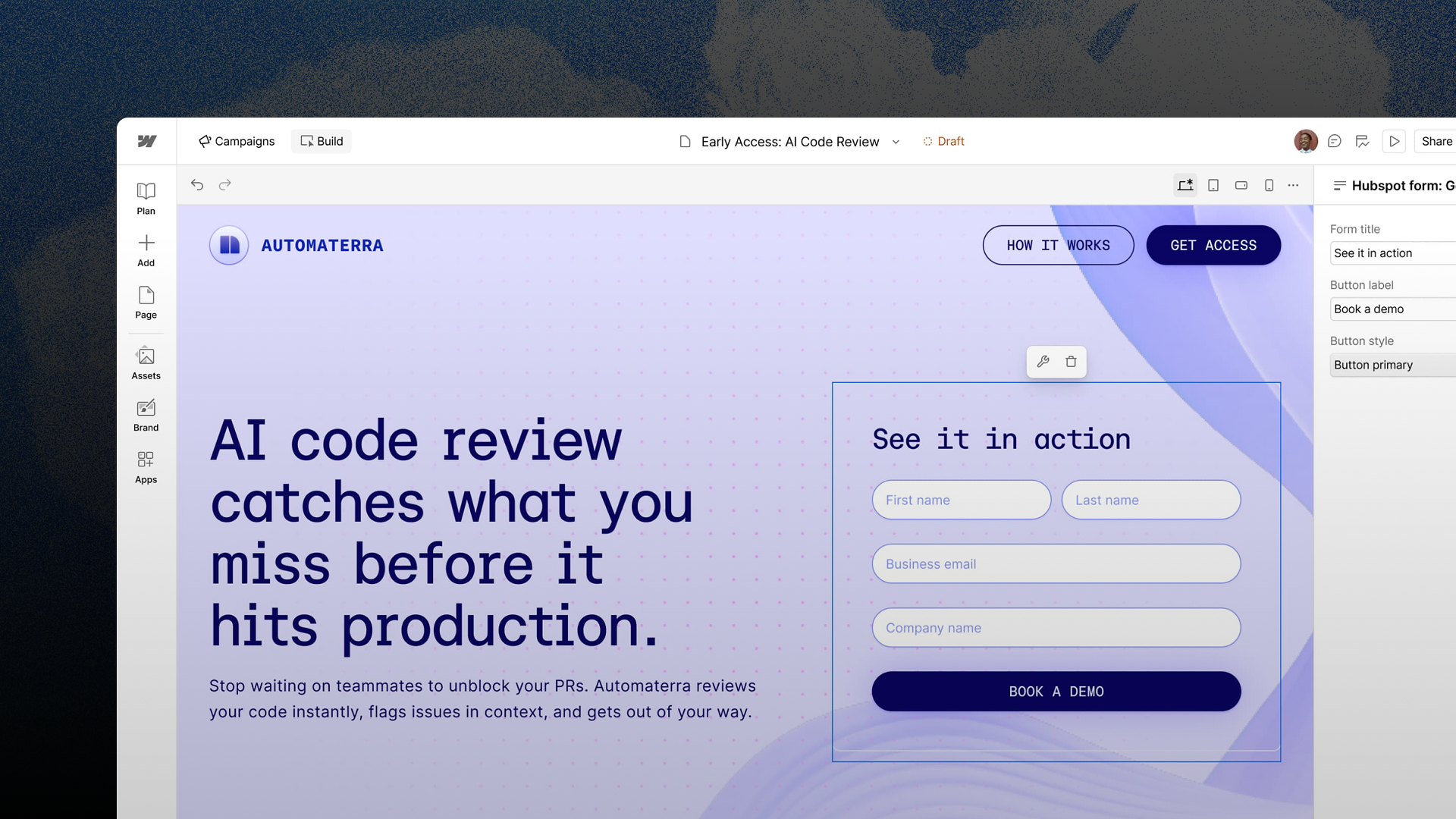
Campaigns builds a complete acquisition campaign from a brief. Announced on September 2, 2026, at Webflow Conf in Boston, it is currently in beta and will be available for purchase next month.
Key takeaways: Campaigns builds a complete acquisition campaign from a brief; it is currently in beta and is the only new Webflow product available for purchase starting next month.
How it works, step by step
Brand system, reconstructed from a URL
You provide your website address. An agent extracts the colors, typography, and UI elements to build a brand system. Webflow notes that this works regardless of whether your main site is built on Webflow or not.
The brief, reviewed by an agent
You submit your brief. An agent reviews it and helps refine the strategy with recommendations for audiences, messaging, and channels.
Pages and variants
Once the brief is approved, Campaigns generates the main landing page along with variants for each audience, target account, or keyword.
The term "target account" is significant. It’s ABM terminology.
Ads and distribution
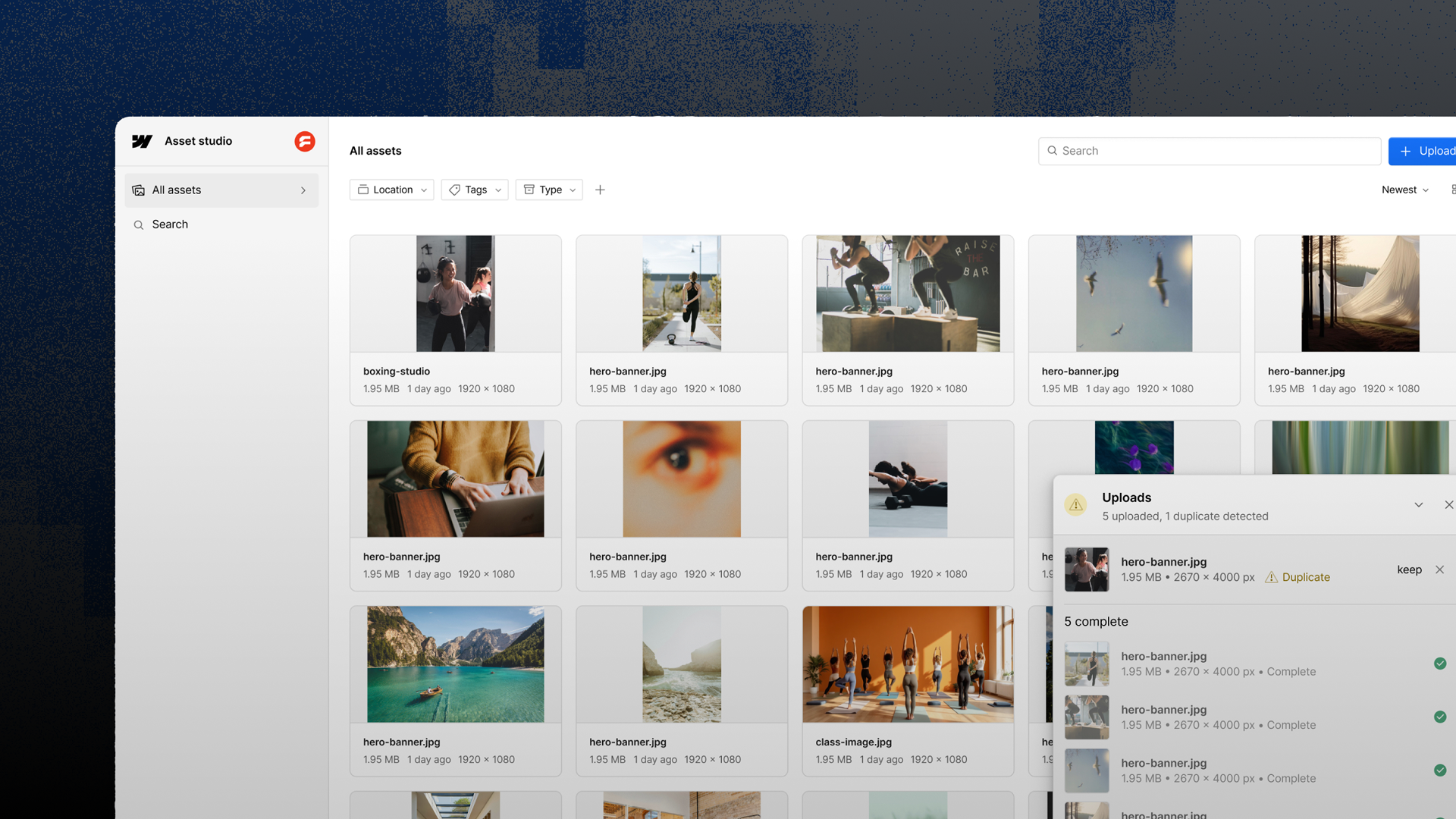
Campaigns also generates ad creative and allows you to push ads and pages to channels like Google Ads.
Key takeaway: The product starts with a URL and a brief, then generates a brand system, a main page, variants, and ad creative, all the way through to distribution in Google Ads.
What happens after launch
Once the campaign is live, it tracks conversions and connects to HubSpot or Salesforce so you can measure pipeline rather than just clicks, and its agents recommend page modifications to improve conversion throughout the campaign.
Key takeaway: Campaigns doesn't stop at launch; it tracks conversions all the way to the CRM pipeline and suggests ongoing optimizations.
What this says about Webflow's strategy
Webflow is entering the acquisition space.
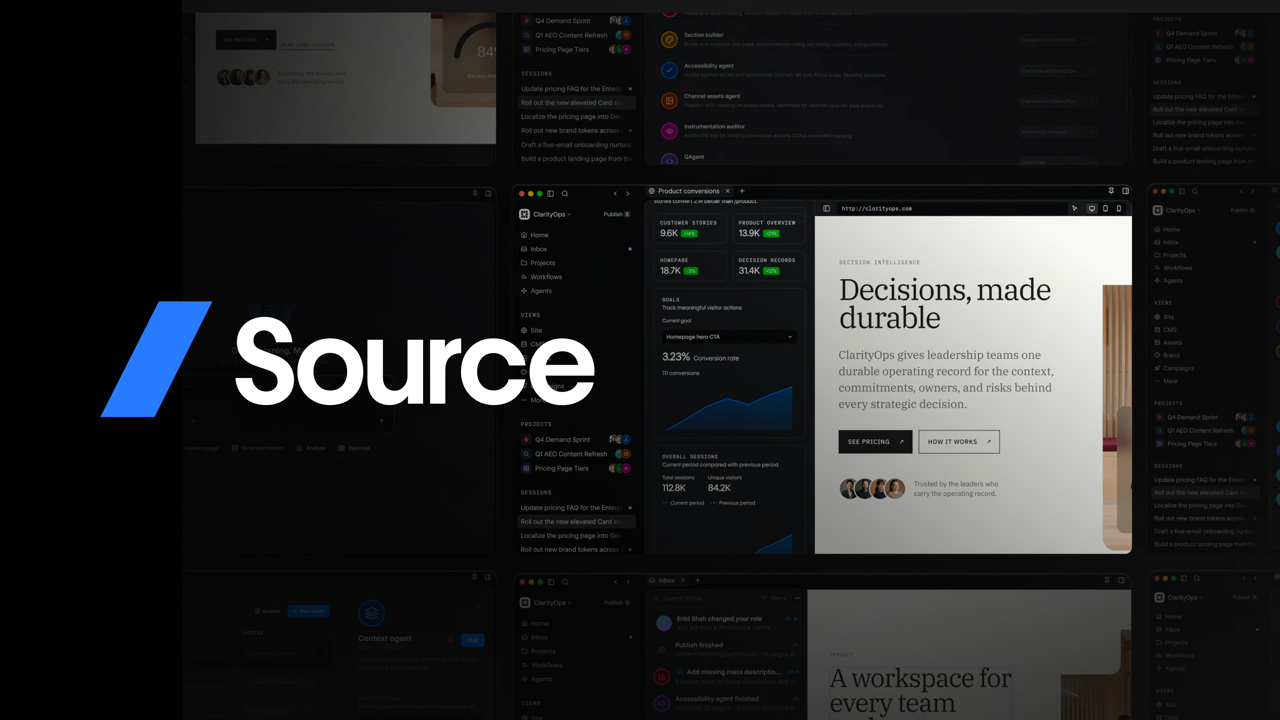
Its scope used to be limited to the website. Campaigns changes that. And just like with Source, the product works on sites not built in Webflow: whether your main site runs on Webflow or not.
This positions Campaigns against landing page builders for paid campaigns on one side, and CRM page modules on the other.
Key takeaway: Webflow is moving beyond the website into acquisition, and Campaigns also works on sites it didn't build.
The brand system reconstructed from a URL, our main reserve
An agent reading a live page retrieves what is displayed: colors, font families, and the appearance of certain components. What it doesn't retrieve is the underlying logic. Which color is used for what, which component is reusable, and which is a special case.
A website might display eleven shades of blue even though the design system only defines three, because eight pages have drifted over the years. An agent reconstructing from the page will find eleven blues and turn them into eleven tokens.
The generated system is therefore an approximation of the surface. For a three-week campaign, that might be enough. For a brand that values consistency, it will produce pages that look like the site without being on-brand.
The question we will ask as soon as the beta opens: can we give it the actual design system instead of letting it guess?
Key takeaway: A brand system reconstructed from a live page captures the appearance, not the logic, and everything Campaigns generates afterward depends on that.
Keyword-based variants: a risk no one mentions
Automatically generating landing page variants by keyword at scale looks a lot like the pattern Google targets as "doorway abuse" in its anti-spam policies.
Google refers to pages created to rank for similar queries that lead to intermediate pages less useful than the final destination. Its examples are all funnel-based: city-specific pages that redirect to a single page, or pages generated to funnel visitors toward the actually useful part of the site.
Therefore, a campaign landing page that is itself the destination, with its own offer and form, does not meet the criteria for an intermediate page. It is not an automatic violation. It is a risk factor that increases as variants multiply, become too similar, and are indexed.
An audience-based variant served behind paid traffic and never indexed poses no problem at all.
Webflow says nothing about this. Neither regarding default indexing nor canonicals.
For variants used only for paid ads, a noindex tag is sufficient. For variants you want to keep crawlable, use a canonical tag pointing to the main page and no noindex. Combining both doesn't help: Google does not recommend using noindex to designate a canonical page, as a noindexed page is removed from search, which renders the canonical ineffective.
Key takeaway: Indexable variants that are too similar fall under the doorway abuse pattern, so you must choose: noindex for purely paid variants, or a canonical tag to the main page if they remain crawlable—never both.
What this changes for a marketing team
Campaigns are measured by results: cost per lead, conversion rate, and pipeline generated. After two campaigns, a team will know if Campaigns delivers on its promise.
Audience-based variants only make sense if the traffic supports them. Six variants for a campaign with two hundred visits per week don't produce insights; they produce noise.
If agents suggest modifications while the campaign is running, you need to decide who approves them and how quickly.
Key takeaway: Campaigns is judged by its two-campaign structure because everything is measurable, but variants only add value if the traffic volume is there to support them.
What this means for agencies
Creating campaign landing pages was already a low-margin service under significant pressure.
The real value now lies in what Campaigns doesn't do. Deciding what to say and to whom—what Webflow calls refining the strategy, which an agent attempts without knowing the client's market. Providing the actual brand system instead of letting an agent guess it. Setting up the technical framework for indexing variants.
Key takeaway: Landing page production is losing even more value, while strategy, authentic brand systems, and the technical framework for variants are gaining it.
Our concerns
Pricing
Nothing has been announced, even though the product will be available for purchase next month.
Our hypothesis remains the same as it was for Source: a portion indexed to AI consumption, given that Webflow introduced AI credits to all Workspace plans on May 13, 2026. For a product that generates pages, variants, and creative assets in bulk, the final cost will depend on usage intensity.
Webflow's two dates
The summary of announcements states that Campaigns will be available for purchase next month. The press release from the same day says it is coming sometime this fall. If you are building a campaign plan around it, count on the fall.
Ownership of ad accounts
Pushing ads to Google Ads requires account access. We don't yet know who holds that access, what permissions an agent receives, or what happens if an agent modifies a campaign that is actively spending money.
Consistency over time
The brand system is generated once, based on the site as it exists on that day. There is no indication of how synchronization is handled.
Key takeaway: No pricing despite the launch being a month away, two different dates listed on Webflow, and no answers regarding ad access or brand synchronization.
Our current stance
The product of the week we are most curious about, and the one that worries us the least.
Least worrying because it is measurable. If a campaign built with Campaigns has a lower cost-per-lead than a manually built campaign, the debate is over.
Most curious because the first step—the brand system inferred from a page—is exactly what we do.
So, we will test it as soon as the beta opens, using our own campaigns before those of any client.
Key takeaway: We will test Campaigns as soon as the beta opens using our own campaigns, and the only work to be done until then is to document our brand system.
These businesses have migrated to Webflow
And their marketing teams thank us for it.