
What is Supabase?
Supabase is an open source Back-end as a Service platform that relies on PostgreSQL to provide database, APIs, authentication and storage.
It offers a set of ready-to-use bricks to manage data, users and certain real-time needs without building the entire infrastructure by hand.
Supabase is often presented as an open source alternative to Firebase, with a standard SQL database.
Supabase provides a managed PostgreSQL back-end with APIs, auth, and realtime ready to use.
Key features for B2B teams
- Managed PostgreSQL database with management interface and migration tools.
- REST and GraphQL APIs generated automatically from the database schema.
- Authentication, user management, and policy-based security policies (Row Level Security).
- Integrated file storage and CDN.
- Real-time features to track data changes.
Supabase covers most of the basic needs of a modern back-end without losing the flexibility of PostgreSQL.
For whom and in what contexts?
Rather, Supabase is aimed at teams with a minimum of technical background, who want to speed up the implementation of a back-end without giving up real SQL.
It is particularly suitable for SaaS products, connected portals, and internal applications that need to be robust and scalable.
- Web and mobile applications requiring database, auth, and API quickly available.
- Portals and dashboards with real-time needs (notifications, data that are updated live).
- SaaS products that want to stay close to a traditional PostgreSQL stack.
Supabase is suitable when you want a modern managed back-end while staying in the PostgreSQL ecosystem.
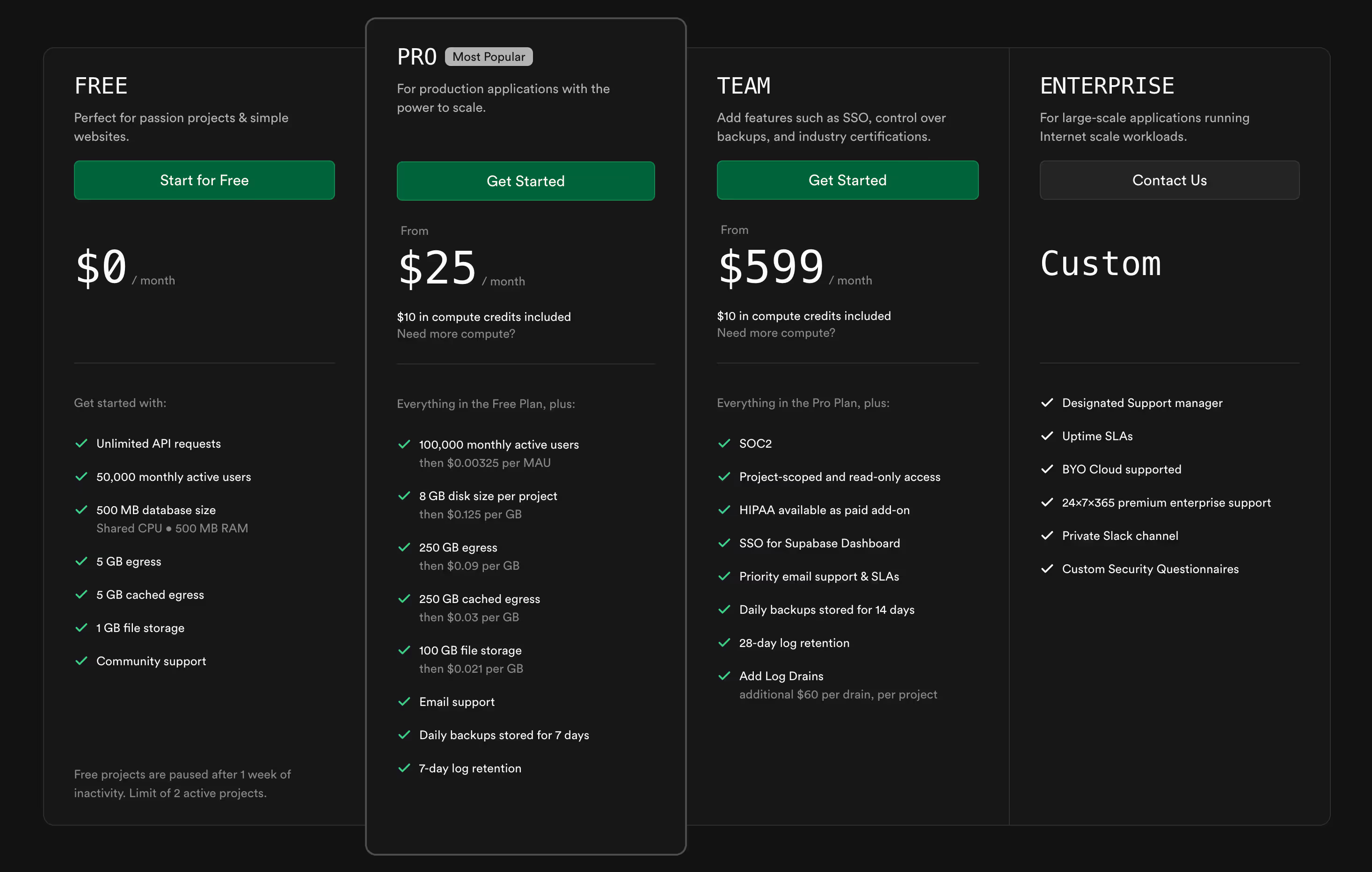
Supabase price
Supabase applies a freemium model with several plans, which differ in the resources included (active users, storage, database, support) and operational guarantees.
- Free: designed for personal projects, prototypes or small sites, with a limited base and resources but an already large number of API requests.
- Pro: for moderately sized production applications with more active users, more active users, more storage, more bandwidth, and more robust CPU/RAM capacities, as well as more robust email support and backups.
- Team: intended for teams that need compliance (SOC2, HIPAA optional), finer roles, SLAs, extended log retention, and advanced monitoring options.
- Enterprise: tailor-made offer for large-scale critical applications, with 24/7 premium support, advanced deployment options, security management and dedicated support.
Supabase can remain economical as long as the needs remain within the limits of Free or Pro, then the cost logically increases as the application requires more resources, guarantees, and compliance.
We-R review on Supabase
Supabase is an interesting building block for more technical projects or SaaS products, especially when a Webflow front must communicate with a robust back-end.
Its SQL approach and open source openness are reassuring for technical teams.
- Serve as the main back-end for a web or mobile application.
- Feed dashboards or portals connected to Webflow via APIs.
- Build a SaaS product that must be able to evolve without being too strong a proprietary lock.
On the other hand, the tool remains more technical than other no-code back-ends, and requires real thinking about the data schema.
Supabase is relevant for more technical B2B projects that want a solid, open source and scalable back-end.
Alternatives and tools similar to Supabase
Among the close alternatives:
- Firebase: very common, but with a different and more proprietary database.
- Xano: a more no-code approach, better suited to non-developer profiles.
- Custom back-ends on PostgreSQL: maximum freedom, but without Supabase's managed tools.
Compared to its competitors, Supabase stands out for its combination of open source + PostgreSQL + ready-to-use managed services.