Sparagus: an SEO and GEO strategy built for candidates, and +80% applications through the website
By focusing on candidates first, Sparagus multiplied its non-brand keywords in Google’s top 10 by 4.5, grew its clicks by 80% and had its best month of applications of the year.
Customer
Project date
Services
Website

applications through the website in September
non-brand keywords in Google’s top 10 in Belgium
Google impressions in one month
impressions in Google’s AI answers in 4 months
Context
Sparagus is a Brussels-based recruitment and consulting firm specializing in IT, engineering, and business, operating across the entire Belgian market in English, French, and Dutch. We supported theirrebranding, followed by theredesign of their website on Webflow, which has been live in three languages since August 2025.
SEO has been part of our support since the site went live. In August 2025, we launched a dedicated SEO and GEO strategy with a clear observation: the site was fast, well-built, and trilingual, but it was primarily being found by those who already knew the brand.
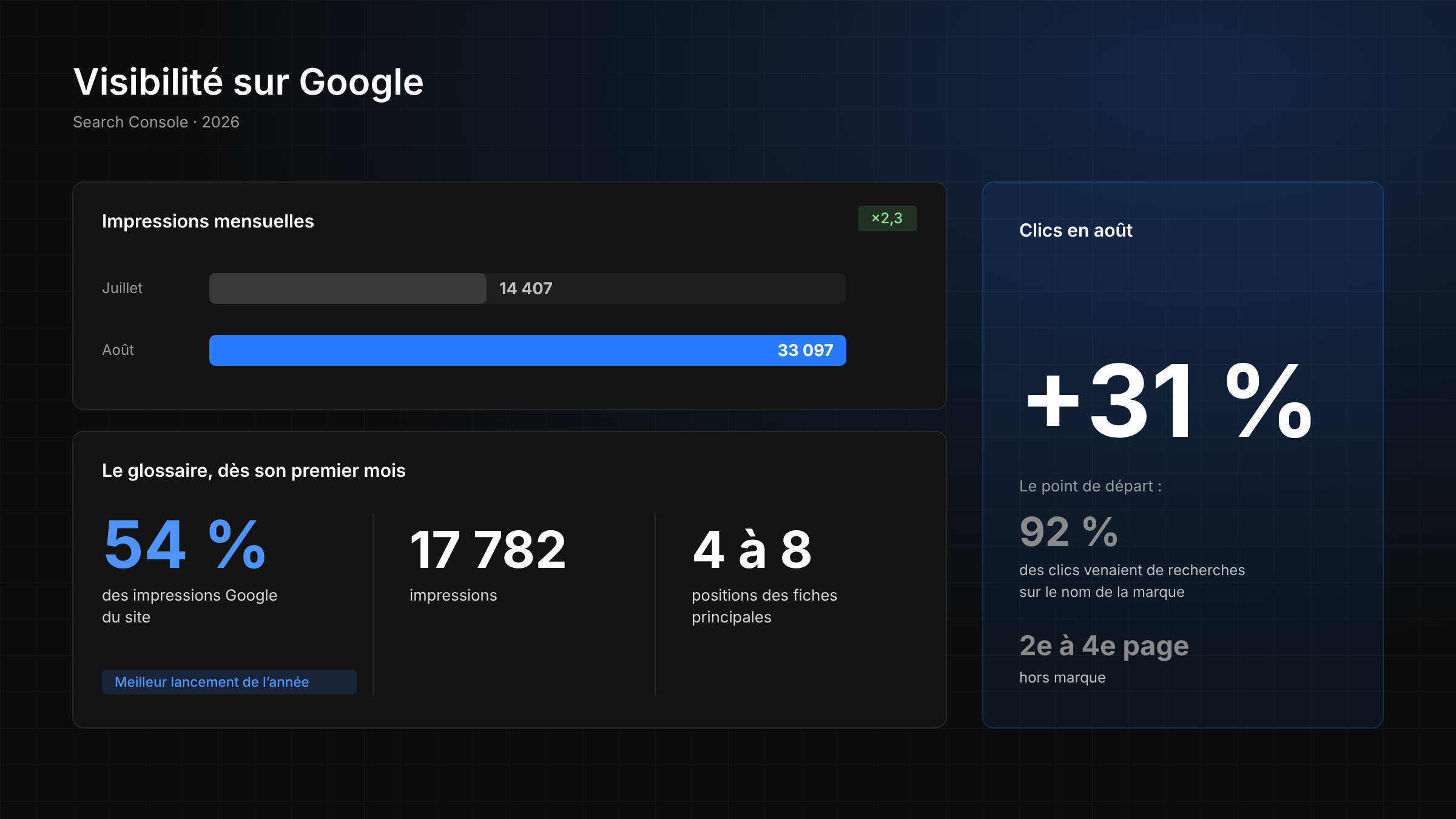
- 92% of Google clicks came from searches for the name Sparagus.
- Excluding branded searches, the site was ranking between the 2nd and 4th page of Google.
- Candidates searching for a job or answers regarding their employment contract in Belgium were finding other sites instead.
The domain authority was comparable to that of the Belgian specialists on page 1. It didn't lack power; it lacked content that answered candidates' questions.
A new, well-built site is not enough to be found. It must answer the questions people are actually asking.
Challenges
Attract more candidates via the site
To make the site a gateway for candidates and consultants looking for work in Belgium, with nearly 280 job offers to promote.
Win non-branded keywords
Be found by those who don't yet know Sparagus, in English, French, and Dutch.
Be cited by Google and AI
Become a reference source for employment and labor law in Belgium.
Prepare the business landscape
Lay the groundwork before targeting companies that are hiring.
Our approach
1. Focus on candidates first
Two audiences search for Sparagus on Google: companies that are hiring—a high-value market dominated by large international firms—and candidates, who ask many specific questions about their contracts, salaries, notice periods, or work permits.
We chose to start with candidates. That is where the site could gain traction the fastest, and every candidate visit can turn into an application for a job offer.
Start with the most accessible target to get results in a few weeks, then expand to business keywords once you have the data.
2. Answer candidates' real questions
We built a set of content that answers what candidates are looking for before they apply, in English, French, and Dutch:
- An A-Z glossary of recruitment and work in Belgium, filterable by audience (candidate or company).
- A wiki of practical answers ("how much," "how to," "am I entitled to"), with dated and sourced figures: a first batch on salary and benefits, out of about fifty planned articles.
- Career Advice guides: interviews, cover letters, CVs, and salary negotiation.
- Every legal statement verified against official sources (FPS Employment, RSZ/ONSS, CNT, Immigration Office).
3. A blog refocused on Belgian news
The data showed that news about the Belgian market attracted the right readers. We therefore refocused the editorial line:
- New articleson regulatory news and the Belgian market (single permit, EU AI Act, NIS2, end of SAP ECC, shortage occupations), verified against primary sources.
- All existing content reviewed, with Q&As added where they were missing.
4. Directing every visit to job offers
Content that isn't followed up on doesn't lead to applications. We overhauled the internal linking structure so that every article, fact sheet, or answer leads to job offers and service pages: no more isolated articles, and the "Find a job" page, which previously received no internal links, now receives ten.
5. Three languages, three markets
A literal translation does not carry the right keywords in Dutch or English. Each business page has been given a title and meta description based on a keyword specific to each language, and all content is published in English, French, and Dutch.
6. GEO foundations and tracking
- Allms.txtfile andstructured dataon the main pages and the wiki.
- Keywords tracked every week and questions asked every month to ChatGPT and Google, in all three languages.
Results
In applications:
- +80% increase in applications via the site in September 2026 compared to the monthly average from January to August: the best month of the year.
- Organic search traffic converts 2.5 times better than direct traffic: 4% of organic visitors take action, compared to 1.6%.

On Google(Search Console, 2026):
- Non-branded search queries in the top 10 in Belgium increased 4.5x between July and September.
- Clicks from Google up by 80% between July and September, following seven months of decline.
- Impressions multiplied by 2.3 in one month between July and August, driven by the launch of the glossary.
In AI:
- Impressions in Google AI features multiplied by 9 in four months, from May to August.
- sparagus.be is cited as a source in Google AI Overviews in Belgium, for candidate queries such as minimum wage, notice periods, or the flex income plan.

And now
The foundations for candidates are in place. Since October 2026, our support has shifted to the business target, which is now treated with the same priority as candidates.
What this case shows
- Start with the most accessible targetdelivers quick results and the data for what comes next.
- Answering candidate questionsit’s about attracting those who don’t yet know the brand, then guiding them toward our offers.
- Three languages mean three markets: a unique keyword for each language, not just a translation.
- Facts verified against official sources: that is what makes HR content credible for both readers and AI.

Recent client projects
Explore our latest client success stories