What is Asana?
Asana is a project and task management platform that focuses on clarity and structure to allow teams to keep track of priorities, projects, and deadlines.
The tool is built around a simple vision: each task has a manager, a due date and belongs to an unambiguously structured project.
This approach makes it one of the most popular solutions for teams that need a rigorous tool without excessive complexity.
Asana focuses on clarity and the user experience rather than the accumulation of features. Each task always has an owner, a date and a context.
Key features for B2B teams
- List views, kanban board, timeline (Gantt), calendar and workload to adapt the display to each need.
- Dependencies between tasks to identify bottlenecks and adjust priorities in real time.
- Automation rules (Rules) to trigger automatic actions on projects (assignment, status change, notifications).
- Goals to link tasks and projects to the organization's strategic goals.
- Asana Intelligence: AI for load balancing, project summaries, and subtask generation.
- 200+ native integrations with Slack, Google Drive, Salesforce, Salesforce, Zoom, Jira, HubSpot, and more.
Asana offers a smooth user experience and a quick start, with a much smoother learning curve than ClickUp.
For whom and in what contexts?
Asana is for structured teams who need a clear framework for managing projects and recurring tasks without having to set up a tool from start to finish.
It is particularly suitable for marketing, creative teams, and organizations where clear responsibilities are a priority.
- Marketing teams that coordinate campaigns, launches, and content with specific timelines and milestones.
- Creative teams (agencies, studios) that manage incoming requests, reviews, and deliverables with standardized workflows.
- Departments and SMEs that want to link daily operations to clear and measurable strategic objectives.
Asana is especially relevant when adoption by the whole team is critical. Its intuitive interface reduces resistance to change.
Asana pricing
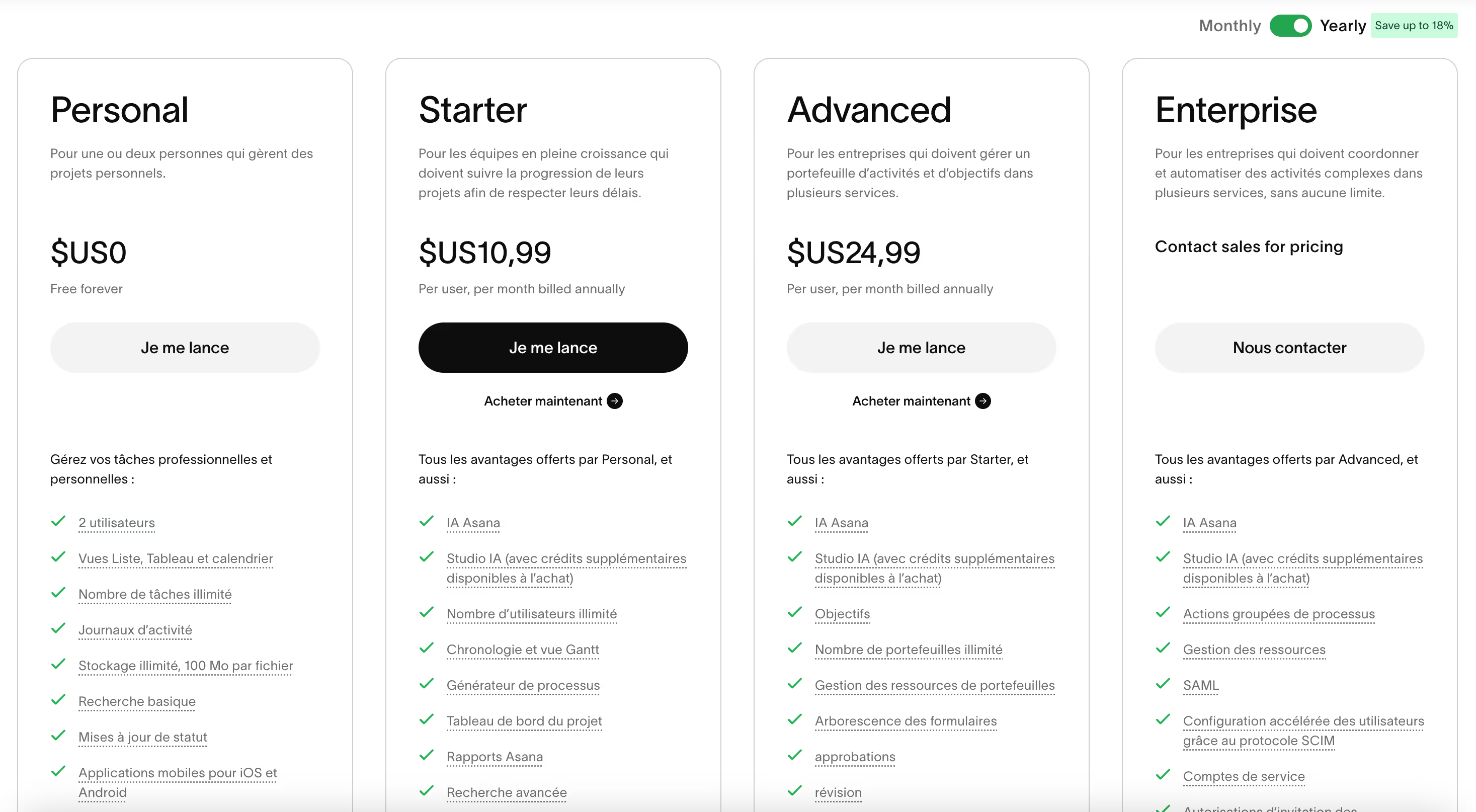
Asana offers per-user pricing with a free plan limited to 10 members, then paid plans that unlock advanced views and automations. The deals are more expensive than ClickUp on the high-end plans.
- Personal plan (free): up to 10 users, unlimited projects and tasks, list, board and calendar views.
- Starter plan ($10.99/user/month): timeline, custom fields, basic automations, and reports.
- Advanced Plan ($24.99/user/month): goals, project portfolios, resource management, and approvals.
- Enterprise plan: customized pricing, SAML/SSO, data control and priority support.
Asana is more expensive than ClickUp at the middle and higher levels — but its faster onboarding can make up for the extra cost for low-tech teams.
We-R reviews on Asana
Asana is the tool we recommend for teams that want to get started quickly, with minimal onboarding friction.
Its clean interface and ready-to-use workflows allow it to be operational in a few hours, where ClickUp will require several days of configuration.
- Manage marketing campaigns with clear timelines and defined responsibilities for each member.
- Coordinate creative teams or customer projects with standardized and reusable workflows.
- Follow team goals and link them to daily tasks to stay on the strategic course.
On the other hand, Asana shows its limits for teams that need a lot of customization or who are looking for the best feature/price ratio over the long term.
Asana is the right choice if speed of adoption is a priority: it is the most accessible project management tool among business solutions.
Alternatives and tools similar to Asana
Several tools are positioned directly against Asana in the project management market.
- ClickUp : more customization and better feature/price ratio, but a longer learning curve and a busier interface.
- Monday.com : very similar in terms of accessibility, with an even more visual and dashboard-centric approach.
- Notion : better for documentation and the knowledge base, but less structured for monitoring complex projects.
Faced with its alternatives, Asana focuses on clarity and ease of adoption — ideal for teams that want to move forward without drowning in configuration.